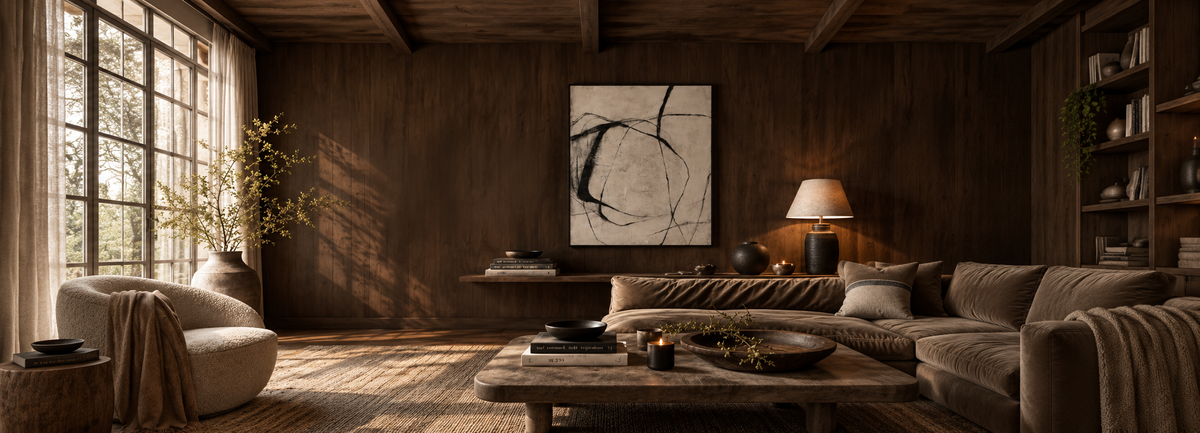
How Interior Designers Are Using Faux Greenery
There is a quiet revolution happening in interior design, one that doesn’t wilt, shed or demand a watering schedule. Faux greenery, once dismissed as a compromise, is now being embraced by leading interior designers as a deliberate, elevated design tool used to shape mood, soften architecture, and bring organic calm into living spaces.
When chosen with care and styled with intention, faux greenery can soften the boundaries of a room, calm visual noise and create emotional warmth more reliably than real plants that have their own demands of light and moisture levels and watering schedules.
Here's how you can apply the same principles and interior designer tricks and tips in your own space.
Greenery That Goes Beyond Decoration
One of the biggest shifts in modern interiors is how greenery is positioned conceptually. Designers no longer treat botanical elements as an afterthought or accessory, instead, greenery, particularly faux greenery is used structurally within a room’s composition.
A tall faux olive tree may serve the same visual role as a floor lamp, balancing height and weight in a corner. A sweep of trailing foliage can guide the eye along shelving. A carefully curated faux flower arrangement can anchor a tablescape or vignette the way a sculpture would. The plant form becomes part of the architecture of the room and shapes how the space is read and experienced.
Faux greenery behaves predictably within a composition, which is invaluable when building layered interiors.
Reliability Is a Design Advantage
Real plants are living collaborators and sometimes difficult ones. Light shifts through seasons, heating systems dry the air, travel interrupts care routines and even the most attentive plant lover cannot guarantee plant performance.
Designers working on show homes, hotels, commercial interiors and residential projects, increasingly choose faux greenery because it removes uncertainty without removing beauty. The foliage remains full, the silhouette intact, the color consistent. The room looks finished and will remain so months later.
Softening Modern Interiors
Contemporary interiors often lean on hard materials, stone, steel, glass, plaster, polished wood. These surfaces, although stunning, can look a little harsh and emotionally cool. Designers frequently introduce greenery specifically to counterbalance this effect.
Faux greenery is particularly useful because it can be placed exactly where softness is needed, regardless of light conditions. A sculptural branch can dull down the severity of a marble island, layered foliage on shelving can blur the boundaries of any harsh lines and add a vertical lift and organic contrast to the landscape of a room
The Quiet Power of Greenery in Low-Light Spaces
Some rooms are notoriously tricky to use real plants. Bathrooms, hallways and windowless rooms are often visually starved of organic form.
Designers are now increasingly treating these areas as exciting styling opportunities rather than limitations. Faux ferns in bathrooms, trailing greenery above shelves bring life to transitional spaces that might otherwise feel a little sterile and purely functional.
Even when we know greenery is artificial, the visual language of leaves and plants still signals freshness and vitality. The nervous system responds to plant shapes with measurable calm. Designers now understand this, and they design with faux botanicals in mind.
Where the Greenery Comes Home
Giving thought to the pot, vase or vessel used to house your faux greenery will add to the realistic look and feel.The vessel lends gravity and story, a sense that this greenery belongs here, not as decoration, but as presence. An oversized hand-thrown pot or woven basket will create its own visual language that complements not only the decor but the foliage too.
The Rise of Botanical Installations
Beyond individual plants and arrangements, designers are increasingly using faux greenery in large-scale installations. Greenery walls, ceiling foliage, cascading stems and room-dividing plant screens are becoming more common in both residential and commercial design.
These installations are difficult, sometimes impossible to pull together with living plants due to weight, irrigation, drainage, and maintenance constraints. Faux greenery removes those barriers and opens creative possibilities making these installations feel immersive and visually stunning.
Making Faux Greenery Look Natural
Nature is expressive, imperfect and not uniform. Abigail Ahern’s collection of faux greenery celebrates these imperfections and nuances, paying close attention to scale, weight and movement. We use matte finishes, tonal variation and fine detailing to avoid artificial shine. Under soft interior lighting, these subtleties make the difference between something that reads as decorative to something that reads as botanical.
Many designers also quietly blend real and faux elements, perhaps fresh seasonal stems placed among permanent foliage allowing the arrangement to carry both longevity and immediacy.
Faux Greenery You'll Love
Discover The Beauty
Emotional Design and the Language of Leaves
There is a reason greenery appears in nearly every design tradition across cultures and centuries. Botanical forms speak a universal emotional language. Curves, branching lines, layered leaf structures, these patterns mirror growth and movement. They counter the rigid geometry of built environments.
A room without any organic form can often feel unfinished, flowers and foliage enhance the everyday and faux greenery and flowers allows that botanical presence to be continuous rather than occasional, extending the emotional benefits of botanical allure into places where fresh arrangements may not last.
Faux, But Still Faithful to Nature
Using faux greenery or artificial flowers are not an attempt to fool the eye, but a tribute to the beauty of the natural world, a way of carrying leaf, branch, petal and wild grace into the places where we live our daily lives. When botanical forms are used indoors with care and artistry, they weave a subtle sense of belonging into a space. The room feels less constructed and more grown, calmer, steadier, more natural. Nature’s shapes and rhythms ground us quietly; they soften the atmosphere and create an invisible thread of connection so the interior no longer feels separate from the living world outside, but gently rooted and connected within it.
More Botanical Inspiration
Curate a home with verdant hues to make your space feel naturally grounded and connected to nature throughout every season.
More From The Flower Studio
Discover more articles from our flower studio and be inspired to use faux flowers in your home in every room throughout every season.