



ABIGAIL AHERN
The Art Edit
Abi's Formula for Creating an Art Collection
Scale, placement, contrast and a few rules worth knowing. Discover how the right piece can change a feeling of the room and make it feel more like you.
Art Changes More Than The Wall
Art is one of the quickest ways to shift the feeling of the room. It can introduce tension, soften a space, add contrast or simply give your eye somewhere to land. I rarely choose art because it perfectly matches the room. The trick is less about matching but more about scale, balance and instinct.
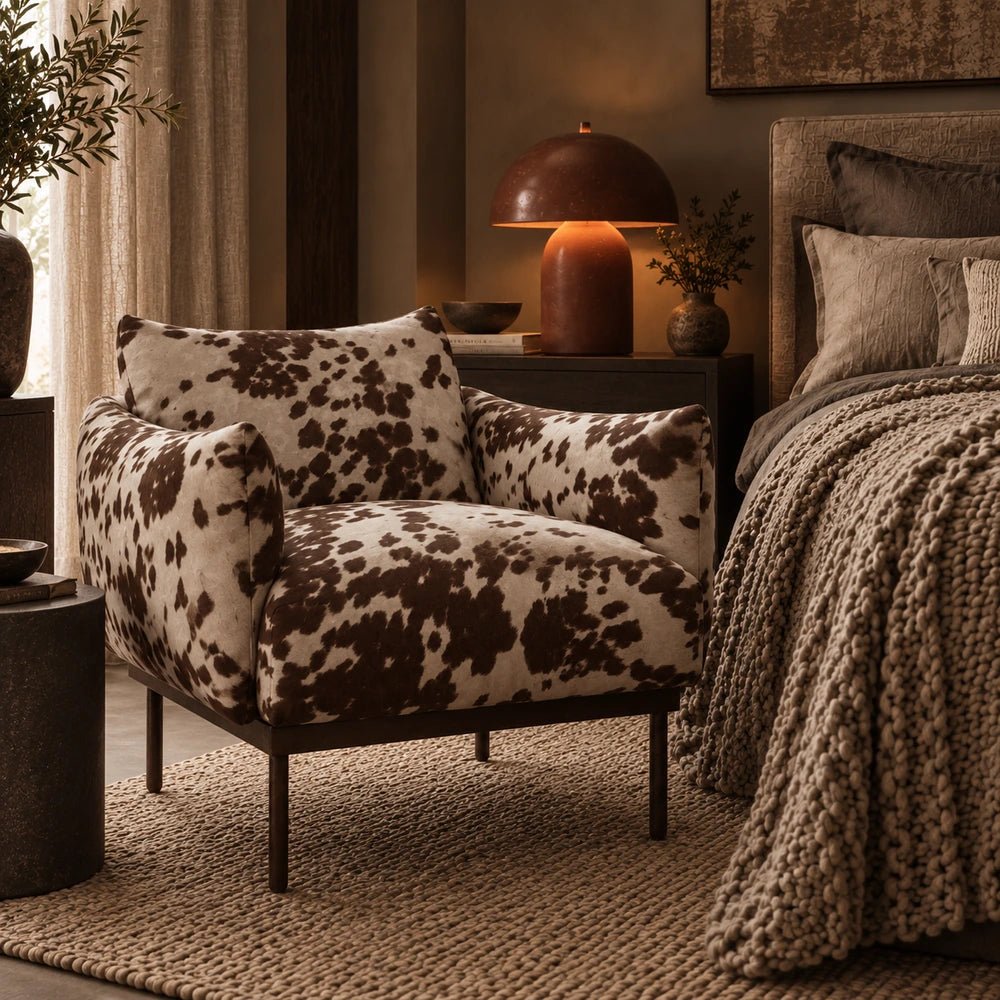
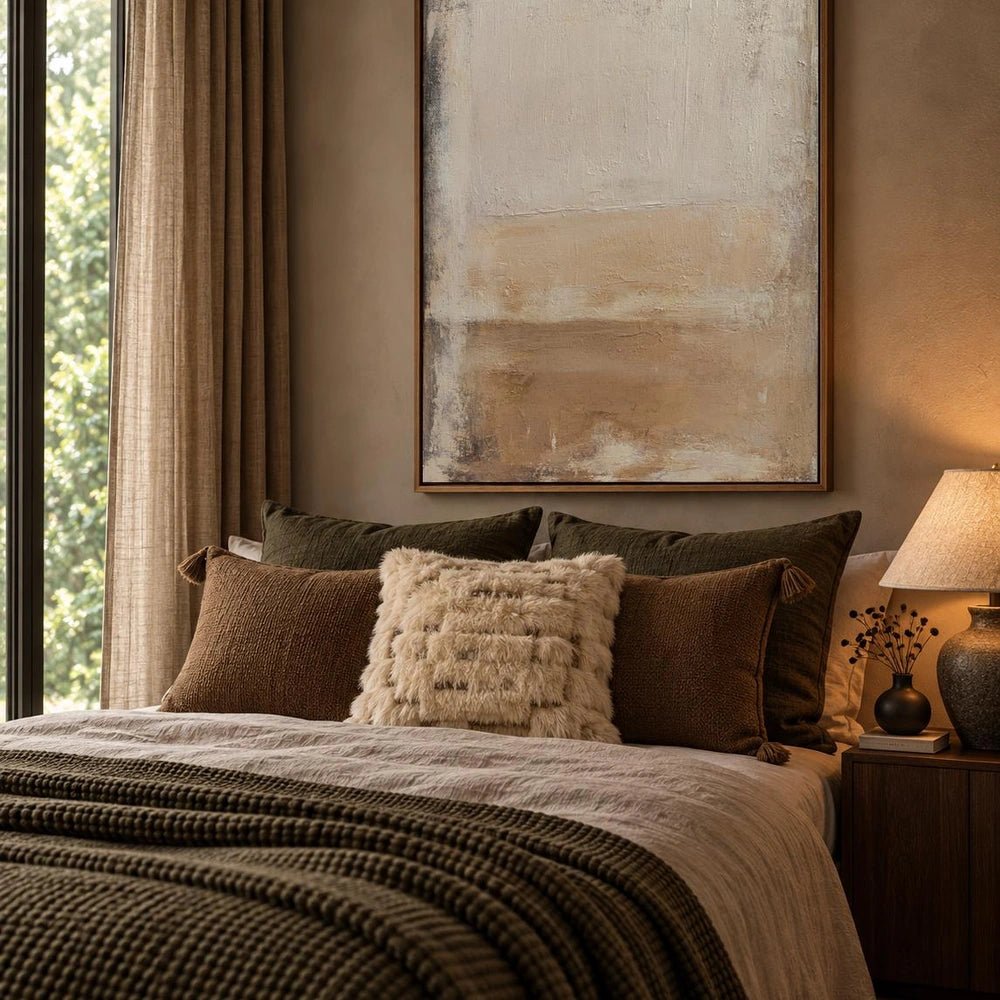
01 | Go Bigger Than You Think
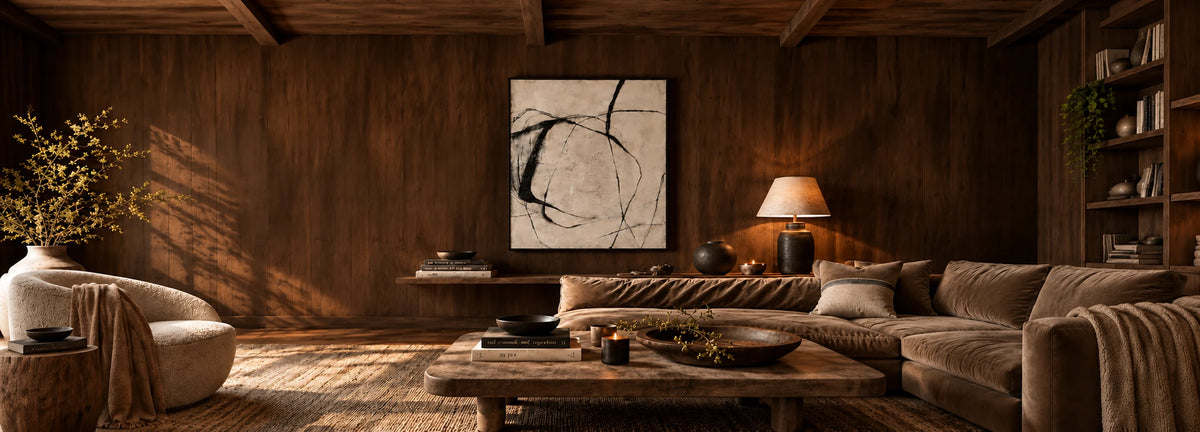
One of the most common mistakes with art is choosing something too small. A generous piece gives a room confidence. I want the artwork to feel connected to the furniture below it rather than floating idependently above it.
Abi's Note:
If you're choosing between 2 sizes, I'd almost always go larger.
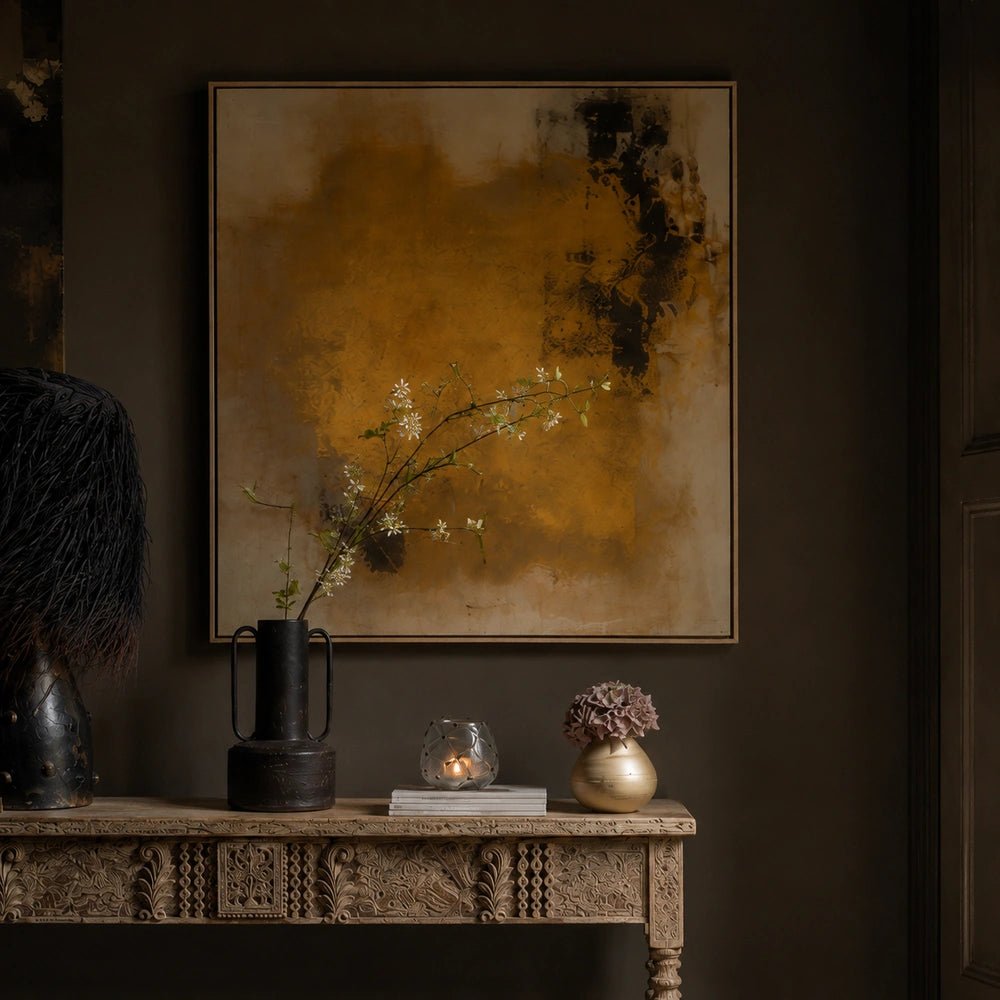
02 | Don't Match The Room
Your artwork does not need to repeat every colour already in the space. Some of the most interesting rooms have a little friction, pale art against a dark wall, graphic black lines in a soft neutral room, a warm ochre piece cutting through and otherwise earthy palette.
Think contrast, not co-ordination.
Different mood. Same room changing effect
Discover abstract, expressive and figurative pieces chosen for the character they bring
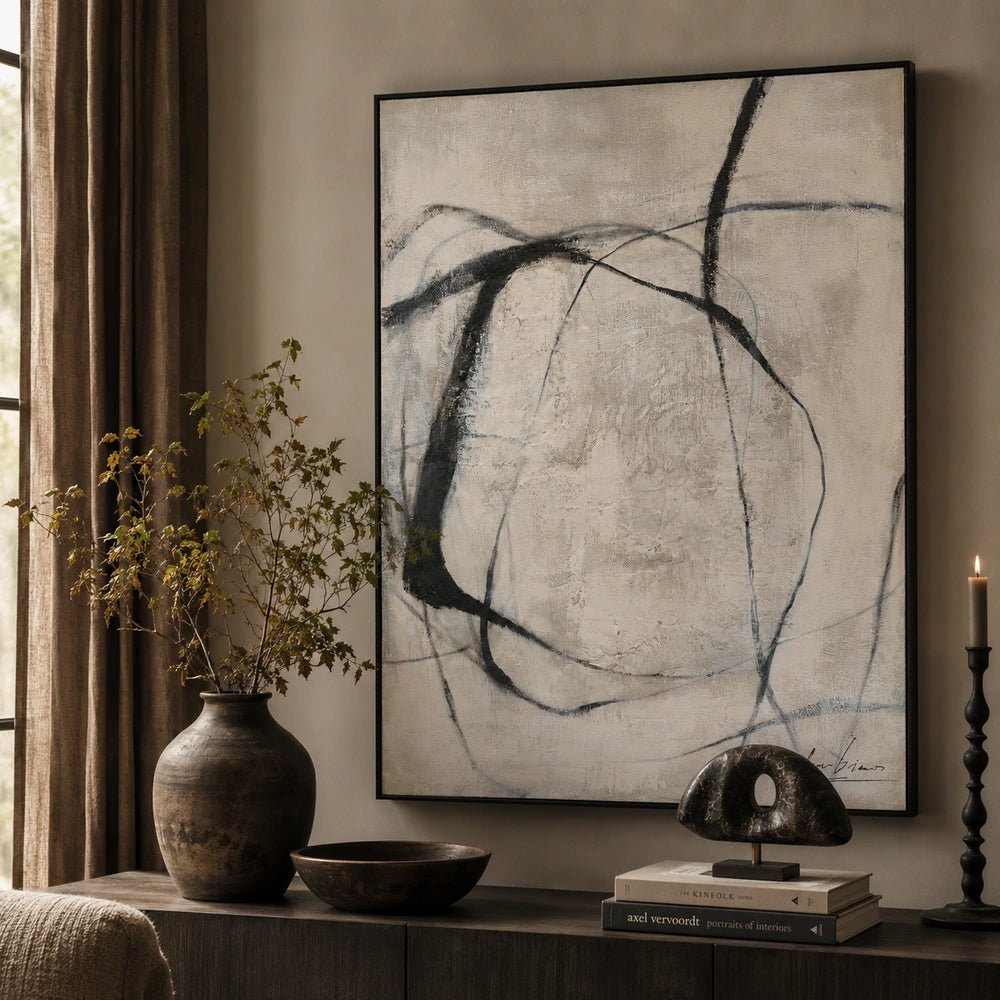

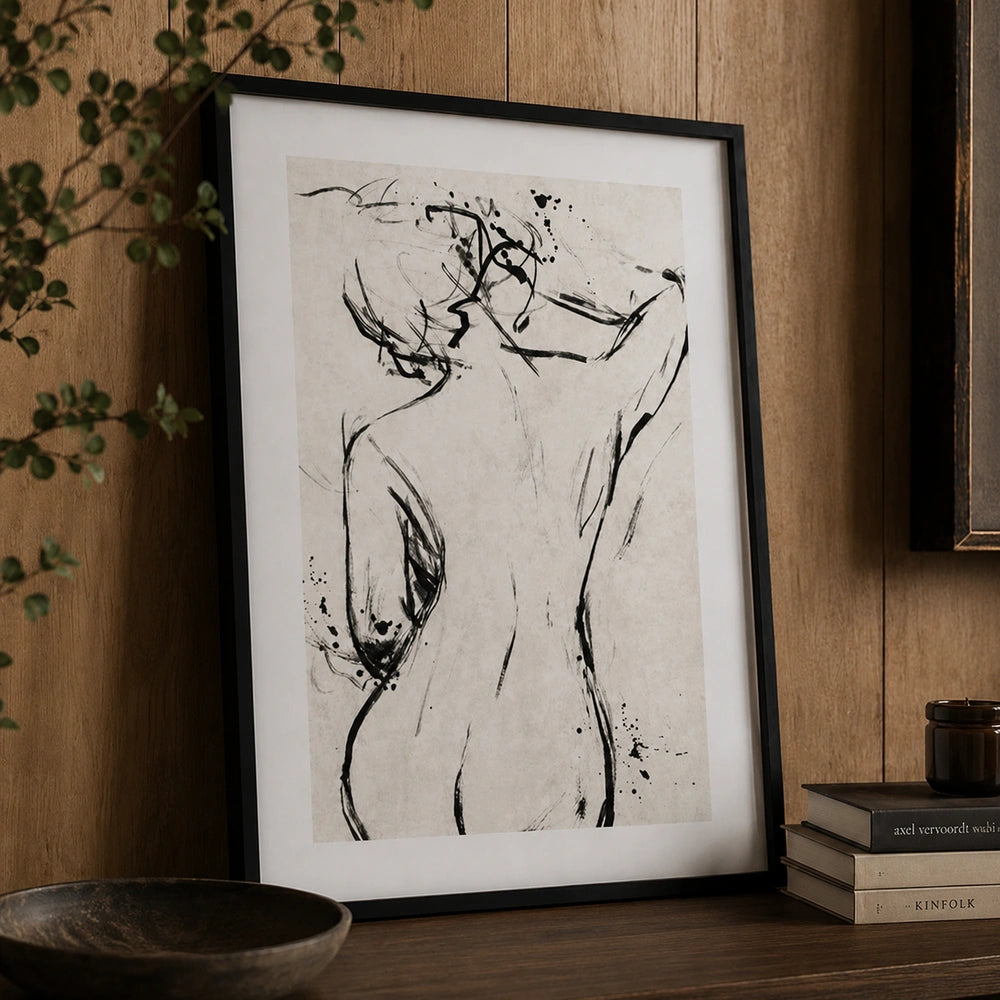

03 | Let it Lean
Not everything needs a nail. Leaning a piece on a console, mantel or shelf immediately makes a room feel more relaxed and collected. I particularly like doing this with drawings and smaller works as it stops them feeling too formal. Layer it with books, vessels and lighting, but don't overcrowd it.
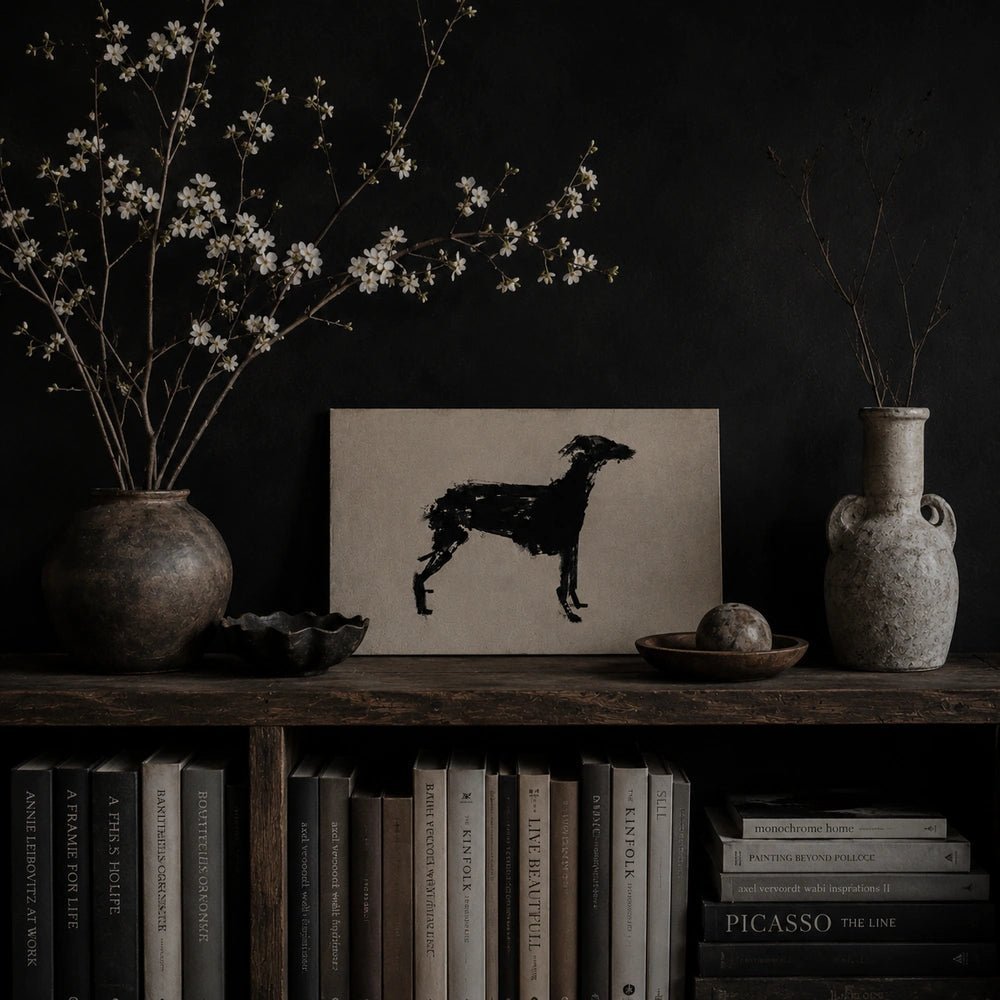
04 |Every Room Needs a Statement
Smaller works are brilliant in the places people often forget: above a console, tucked onto shelving, at the end of a hallway or layered amongst objects. They add personality without asking to dominate the room. These are the pieces that make a house feel collected over time.
A Few Rules Worth Knowing
01
Start with scale
Work out what size the wall can take before falling in love with the artwork.
02
Connect your art
Beds, sofas, fireplaces and consoles give art an anchor.
03
Don't hang high
Art should feel part of the room not the ceiling.
04
Use contrast
Dark against pale, graphic against soft, quiet against layered.
05
Mix orientations
Portrait pieces are excellent for narrow spaces; landscapes give width.
06
Trust your heart
The piece you keep coming back to is usually telling you something.
ABIGAIL AHERN
Art For Rooms With Something To Say
Textural abstracts, expressive line work and quieter graphic pieces chosen for the character they bring.